The Purge

It’s been 3 years since my parents died.  It took two years to finally settle their estate (thank you COVID). It’s been almost a year since I have looked at any of their documents. All their paperwork has been hiding out in the attic. It’s a few plastic bins that include years of personal documents. One big bin holds their historical stories, my dad’s World War II papers, my mom’s baby book, pictures, memories.

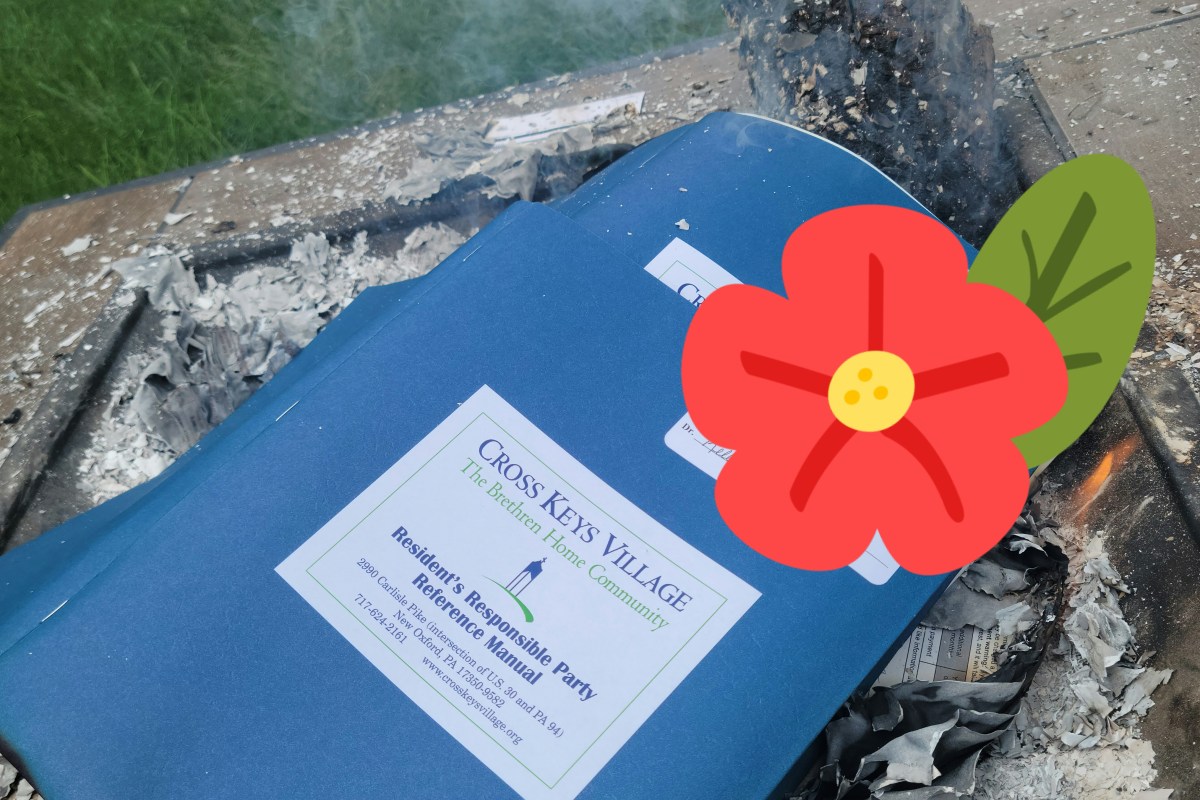
I decided a few weeks back that it was time to start going through the bins. It was time to purge, and I felt strong enough emotionally to start the process. Before we go any further, you need to know that I am a sentimental fool, I hold onto everything. I attach an emotion to an object. I can’t let things go. I have a whole bin just dedicated to my daughter’s baby clothes. I knew this purging process was not going to be easy. So, I thought I would start with the financial papers and years of accumulated bills, insurance papers and bank reports. I pulled the bin down from the attic and started a fire in the file pit. I was going to purge with a bang.

I opened the lid thinking it would be an easy process of just dropping it all into the pit of fire. Boy was I wrong….

Right on top were all the sympathy cards for when my parents died. I couldn’t get rid of them because I never read them. When my parents died, I opened the envelops but never read the cards. There they sat waiting for me. Deep breath, open first card….wow! For all you who are reading this and sent a card, thank you. Many of you shared a memory of my mom or dad that made me smile through the tears. It was an emotional time of remembering the pain of loss. The cards brought comfort, even 3 years later. Next out of the bin was the funeral sign in book. I looked through that and was reminded of the impact my parents had on their community. People came to pay respects to two people who in some way touched their lives. It was incredibly beautiful. I decided to keep the sign in book. What I will do with it in the future is uncertain, but I needed to hold onto it.

Next came the financial paperwork. I was flooded with memories of dad handing over his check book and how he trusted that I would meticulously balance his check book every month. Sorry dad, I failed you on balancing that checkbook! I loved seeing his handwriting. Next were all their medical documents. My mother was meticulous with keeping medical documents. She wrote down every medication she and my dad ever used. Many of the files contained legal issues that they addressed over the years, retirement documents and insurance information. Items that my parents kept in safekeeping in case anything happened. It felt good to purge the paperwork, but hard too because it seems so final.

We keep things because we find them important. When someone we love dies, we eventually have to go through the stuff.  I felt sad seeing a lifetime of stuff be disposed of it seems as if I was disregarding their life work by throwing it away. I still find it hard to shake that emotion. This past weekend, my brothers and I met up for some ice cream and family time. My brother wanted us to look through some of the items he had held onto when we cleaned out our parents’ apartment before they transitioned to the next care level. His box was full of wonderous treasures. In fact, we discovered a family secret that neither of my brothers knew, just because we read the family history that my father wrote down.

I reflected on that family history and realized that our kids don’t even know where our family came from. My great great grandmother was alive during the Civil War!  Our father wrote it all down, we have this beautiful gift of history that somehow, we need to figure out how to share with our family, so we don’t lose our roots.  I believe that is the biggest challenge of our generation, what to purge, what to save and what to share.

Have you gone through the purge? If so, what did you find most impactful during that time? Did you find out things about your family that you never knew before? Are you still waiting for the right time?

I remember as a young girl going to my best friend Kim’s house. Kim’s dad died suddenly when she was 7 years old. Her mother was not able to release her father’s clothing from the closet until we were almost adults. I found it intriguing as a young person to still see his clothing hanging in the closet. In this modern time, we have so many ways to preserve items of clothing such as making pillows and teddy bears out of clothing. We can take ties and make quilts, we can melt down a wedding band and make it into a wearable piece of art. Have you found a way to still hold onto clothing items without keeping them locked in a closet?

Grief has no logic. That is what I have determined through this journey.

Hello fellow grievers, it’s been a while since I last did a blog. Where have I been all this time? Well gang, I was studying for a huge licensure exam. I took that exam a few weeks back and passed! Soooo now that the studying is done, I have a little more time on my hands. Truth be told, it kinda felt nice to be so busy that I didn’t have time to think about grief. One has to wonder about the meaning of that. Its learning the fine balance of not dwelling in the grief and moving forward with the grief by my side.

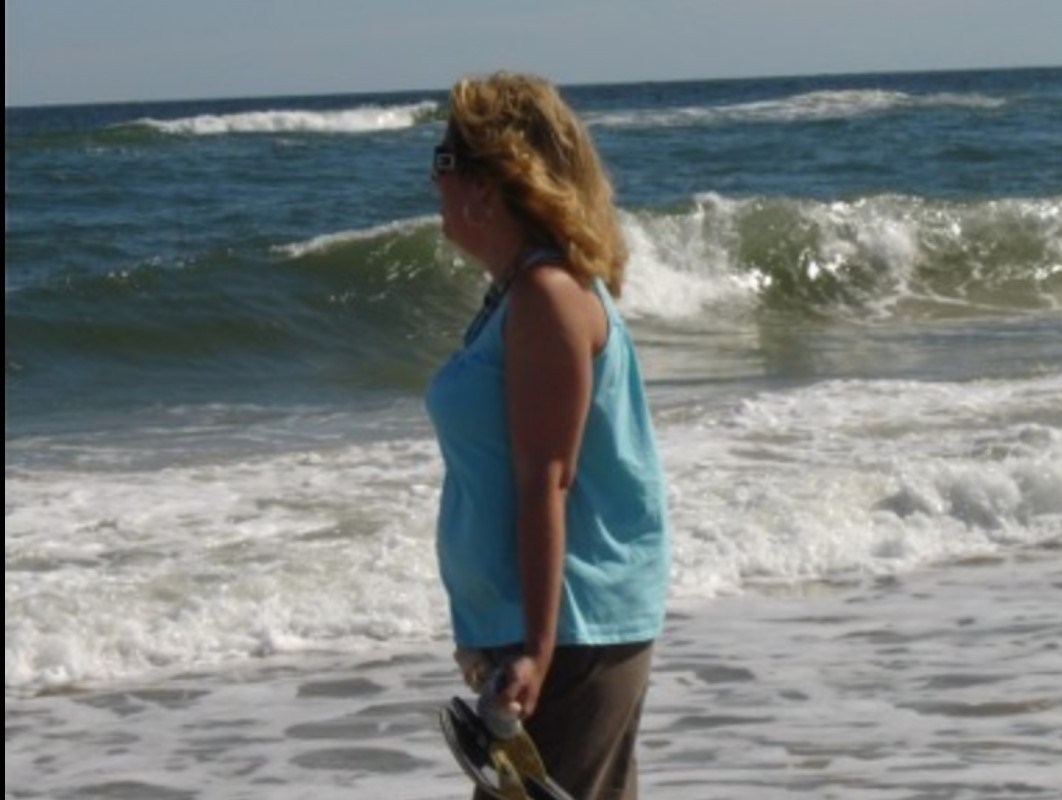
Back in March I went to the beach with a good friend of mine. As typical, when I am at the beach, I walk along the water and allow the sights and sounds to cleanse and calm my overactive mind. Once that occurs, I can focus on my feelings and many times, great ideas come forward. I had my phone with me when these ideas started and buzzing around, so I used the voice to text feature on my phone, thinking it would capture my thoughts much quicker than trying to type them in. Once I spoke my magnificent ideas into the note aspect of my phone, I put the phone in my pocket and walked on.

I finally pulled up my notes from that day on the beach and found that my phone didn’t quite capture my brilliant words as I had imagined it would. I had a jumbled mess of words and sentences that trigger a thought, but I just can’t seem to remember the idea of why I felt it was so important and profound at the time.

The idea that came so strongly to me that morning was grief and logic. Grief doesn’t take a logical road in my mind.  Elizabeth Kubler Ross was an author that put grief into stages. She wrote books about the stages of grief and those books impacted the treatment of grief for behavioral health providers. In fact, in the DSM 5, prolonged grief is now a disorder. It’s defined as persistent longing or yearning and/or preoccupation with the deceased accompanied by at least 3 of 8 symptoms that include disbelief, intense emotion pain, feeling identity confusion, avoidance of reminders of the loss, feelings of numbness, intense loneliness, meaninglessness or difficulty engaging in on-going life.  Wow! Well sign me up for counseling right away. What’s normal? What’s complicated? How do we study it? Elizabeth Kubler Ross’s stages of grief are often referenced when people assume you are not going through the stages in a timely manner. Who defines the timeline of grief? Companies in the USA only allow you 3 days for an immediate family member and 1 day for a distant family member, and oh hey, your best friend dies, good luck on getting any time off. If it takes more than a month to get the acceptance part of grief, do you need mental health help?

This is what happens when people try to be logical with grief. Again, I reference back to those statements that people make to “silver line” your rain cloud.  My personal favorite logical statement is: “Crystal, you know your mother would never have wanted to live the way she was living” NO SHIT, really? She didn’t want to live that way? Wow that is profound, thank you for telling me exactly what my mother would have wanted. All my heart at that time was focused on the loss of her physical body. The logical side of my mind knows that my mother never wanted to live that way, but my heart was breaking at the loss of my mother. My loss of identity as her daughter, my loss of my role as a caregiver.  Three years later, I still struggle with the loss of identity. Does that mean my grief is persistent? My sister-in-law who has done counseling for many years really started me down the process of understanding my grief. You see, I was trying to be logical with my grief, I was trying to do everything to avoid the emotional aspect of my grief. She encouraged me to feel the grief. To sit in it and to stop rationalizing it. She reminded me that I was loved and talked me through some of my lowest points. She reminded me that I was different than my brothers when it came to grieving. I was the caregiver, and I had to hold it together so that my parents could get the care they needed. While everyone else in my family were grieving even before my parents died, I couldn’t do that. I’m at a different part of my grief then my family. I’m on my own journey. I find most days, I’m doing ok, then something triggers a sucker punch to the gut and I lose it all over again. I would get mad at myself, the logical brain would try to be stoic and positive. The emotional side wants to scream and yell and cry and curl up and sleep for days until the feeling passes.

I recently read a really good book by Patti Callahan called Surviving Savannah (non-fiction). There was a statement that spoke so loudly to me. The statement was: “How do you survive the surviving”. How do we survive being the ones left behind? This simple statement has been stuck in my head and I can’t seem to walk away from it. I have been asking myself this question a lot lately, “how am I surviving the surviving?”  I do know the surviving has changed me. I’m not the same person I was on May 3rd as I was on May 4th, or on Aug 14th or November 29th. That person is gone. She’s been replaced with a much more sensitive and cautious person. A fearful person if I must be truthful. A quieter, more introspective person, a person afraid to allow others to get close for fear of loss. A person who is no longer vested in making new friendships, for fear they will only lead to more loss. My best friend not only died, but I lost people simply because they couldn’t stick around in the grief. They didn’t like who I became, or they just didn’t want to talk about my sadness. They don’t like how I am surviving.  I know for those who have stuck around, they tell me they hate seeing me hurt. I say they hate not being able to fix it for me. I can tell you that I am no where near those linear stages of grief that Elizabeth Kubler Ross discusses. I’m probably in the persistent prolonged grief stage, but yet I don’t feel dysfunctional because I’m still surviving the surviving. How are you surviving?

Grief and red hot anger

I’m angry.  I am so mad that sometimes it takes all my self-control to not physically hit a wall, or not scream terrible things at other people so they can feel my pain. This hot red fire usually follows a time where I hit the bottom of my grief, where I have spent a few days feeling sad, crying, and just a general leave me alone attitude. It seems after that, I get mad, just hateful mad.  Lately, I have been going along so well that I started to believe that I was getting a handle on this grief thing. This bout of anger was bad. I have been asking myself why am I getting so angry? I have been doing a much better job with boundary work, I have been cutting toxicity out of my life, I have been more focused on self-care and healthcare, so where did this red-hot fire come from?

It all started after spending a few days of feeling the downward pull of grief. I cried more in those few days then I have in a while. I truly mourned the emptiness that comes from being parentless. I had some personal things going on and all I wanted to do was reach out to my mom and get her insight. When I realized that I couldn’t call her, I wanted to call Kim and talk it out, but I couldn’t do that. I grieved my role loss. I am no longer a daughter and I am no longer a best friend to Kim, and it sucker punched me. I have no role. My daughter is turning into this beautiful young independent woman and she doesn’t need me like she use to, so I am grieving the change in our relationship. Everything that I used to know as a daughter, mother and best friend isn’t there anymore. It’s different and I’m a mess about it. The night I really cried, I reached out to my mom and asked her to come visit me in my dream that night. Just a small visit so that I knew she was there, I just really needed her, I needed my mom. She didn’t show, and I was pissed.  Red hot anger.

The anger was raging toward my mom for not showing up and I wanted everyone around me to feel my anger. I was exhausted from the sheer strength it took just to be kind. I keep getting angry at myself for not being logical. Why can’t I be more logical and less emotional? Why do I have to feel so hard? I’m struggling with friendships, especially those friends who still have their mothers.  We have such little time with each other, and that time should be sacred. Some days I work so hard to not travel down the “if I had only…” road.  I find myself wishing for more time every day, even to the point that every night I want mom, dad, Kim to visit me and remind me of who I am again. I feel like a orphan.  

My dad visits my dreams every so often, he always seems to come when he feels that I need him. When I had COVID, he came one night and hugged me so hard it felt real. I think to myself, why does he come and not mom? Is it because I wasn’t there when he died, and I feel extreme guilt for letting him die without family with him? Is he trying to reassure me he’s ok? Because I sat with mom when she took her last breath, was she able to safely cross over without looking back? My mind races with these thoughts. They race constantly, so it’s no surprise that I am tired at night. As my thoughts race, my rage intensifies. I just want to see my mom one more time, I want to hear her voice and feel her guidance.

Could this really be about not knowing who I am? Have I always looked to my mom and Kim for my identity? How could I not look to them, they were strong powerful women. Women of faith, women who spoke up and defended others. I wanted to be like both of them. Now that they are gone, I must force myself to look inside and determine who I really am, what I really stand for, without their direct guidance or influence. Maybe my anger is because I don’t want to do it without them…

My daughter and I spent some extra time together this past week. I was telling her about my anger toward my mom. I was explaining that I feel abandoned by her, that she won’t come see me and comfort me when I ask her to. My daughter said, maybe she comforts you in other ways. I asked her how she knows mom is around her. She said simply, “the birds”.

On this day of my mother’s birthday and International Women’s day, I can’t help but not be grateful for the strong women who influenced my life. In reality, I know I’m not alone, I know I am blessed with my friends, and family, but it’s times like this that I miss the comfort of my mother, the ease of conversation with Kim. I grieve that part of my life so very much and I feel such anger that its gone. I want to feel my mom’s presence, see her face, hear her voice.  On my walk today, I spotted a beautiful little chickadee, and she was singing a gorgeous song. My thought went immediately to my mom, she loved the chickadee and she had a voice of an angle. I thought of what my daughter said when I asked her how she knew mom was close…the birds. I took comfort in that moment as I stood, watched, and listened the to the song of the chickadee. Happy birthday Momma.

The fixings…

My dad was a master at fixing things. You could call him and ask him to look at your broken washer and he could fix it. I remember as a child following along with him as he fixed something electrical or worked on his car. I used to stand next to him and hold the flashlight as he would talk me through what he was doing. Dad taught me to change the oil and filter in my car. He taught me to change a tire, how to do basic repair work around the house. He was patient like that.

After his retirement, dad decided to take up wood working. He had a friend who would make items out of wood and he and dad spent time together as dad learned the trade. Dad would make all kinds of items and gladly share his creations with his family. I have beautiful benches, bird houses and a clock that dad made from scratch. My mom loved birds. She was especially fond of the blue bird. My dad made beautiful blue bird houses for our back yard. He also made blue bird houses for local county parks. The other week, I took a drive past my childhood home and realized he made boxes and placed them on utility poles that lined our road.

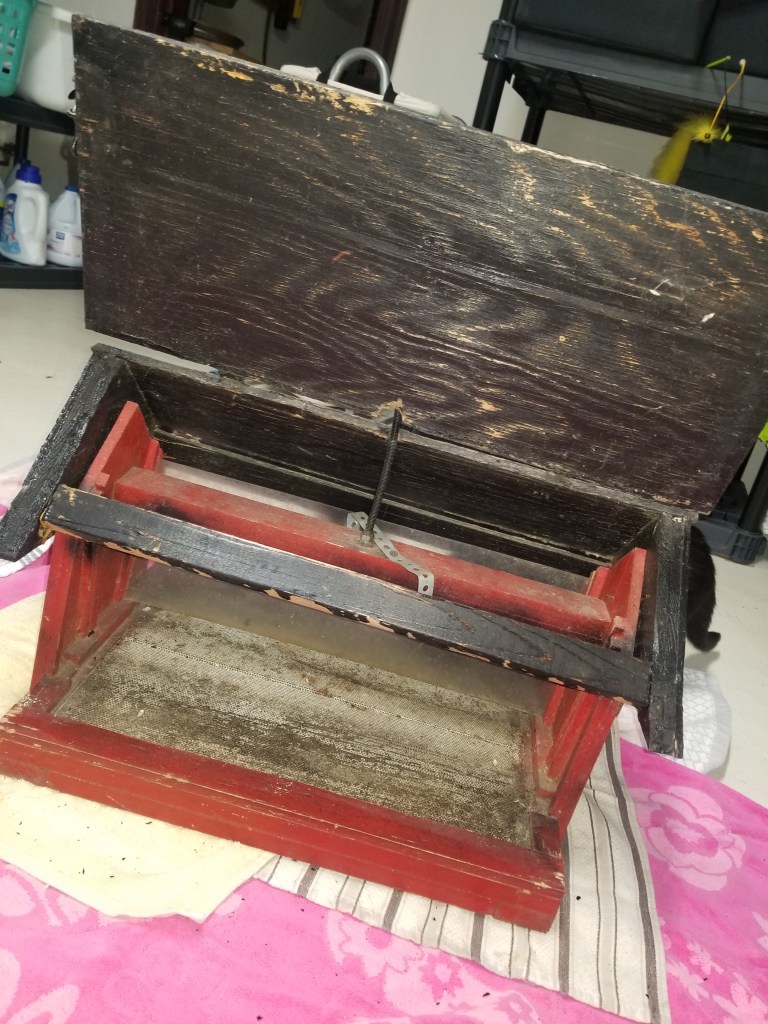
A few months back, I visited with my sister-in-law who lives in the Northern part of our state. She was married to my oldest brother, who died in 2015. I love my time with her because we seem to be so connected by our mutual losses. During this visit, she took me out to the barn and asked me if I wanted this bird feeder. It was huge and heavy, and the paint was peeling. She said my dad made it and gave it to them years ago. She said Gary would re-paint it and even had to fix the plexiglass because a bear knocked the feeder down. I was hesitant at first to accept it. The bird feeder was in bad shape but decided to bring it home. Maybe another member of my family would want the feeder and have the time to fix it up.

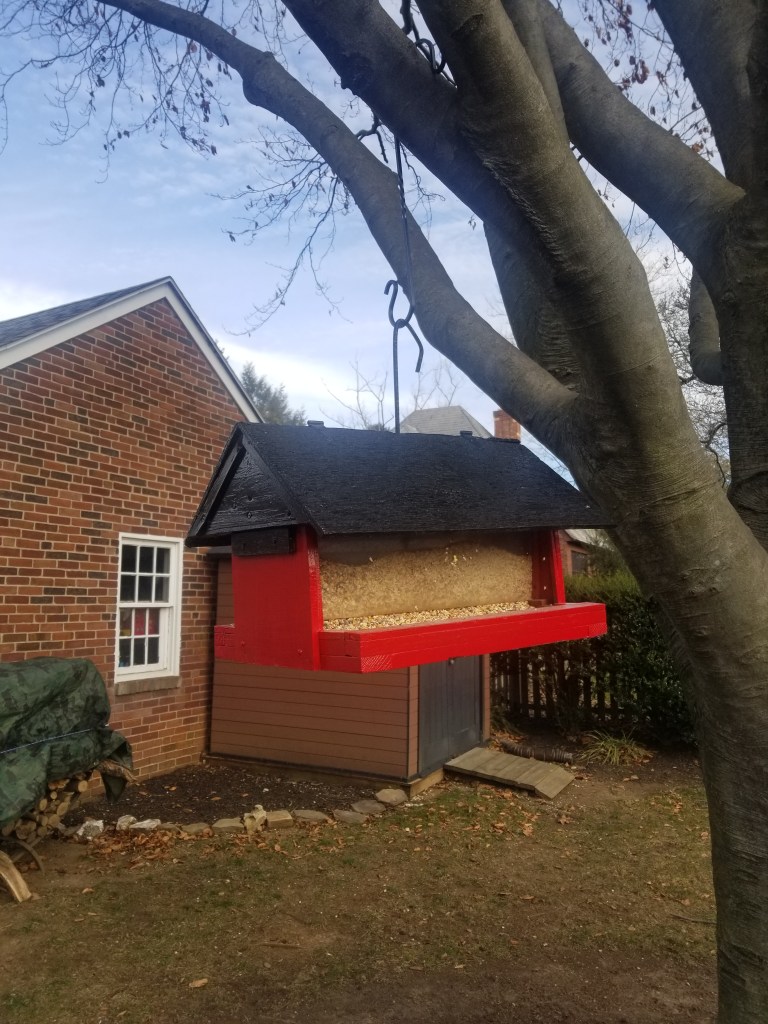
The feeder sat in the garage for a few months. I offered her up to the family, but no-one wanted her. One Saturday, I decided, what the hell, let me see what I can do with her. I channeled my inner dad and went to work. I went to the local hardware store and purchased red and black paint and started the task of bringing her back to life. As I started to explore the bird feeder, I suddenly was transported back to the days I would help my dad. It all seemed so familiar, like the screws he used to screw the roof onto the side of the bird feeder and the hinges he used to lift up the roof to put in the bird food. The way he used an old screw to make it into a hanger to hang the feeder. But what caught me off guard, was seeing my brother’s work in the feeder as well. The modified plexiglass, the way he painted it the last time, the little bits of bird food left over. I was suddenly sitting in the same room as my dad and brother and it was so comforting. So, I did what my dad taught me, what he taught my brother, and I fixed it. As I sat back and admired my work, I smiled at the end result, they would both love the work I did, and they would both find something that I didn’t do quite right, a missed paint spot here or there, but overall, it was good. I placed the feeder out under the tree in the back yard. I can see the feeder from the sunroom. Like my mom, I watch the birds that come to feed and go and say to my daughter “look, there is a tufted tit mouse”. It does truly amaze me how much I am beginning to see my dad, my brother, my mother show up in my own personality, and truth be told, I love it.

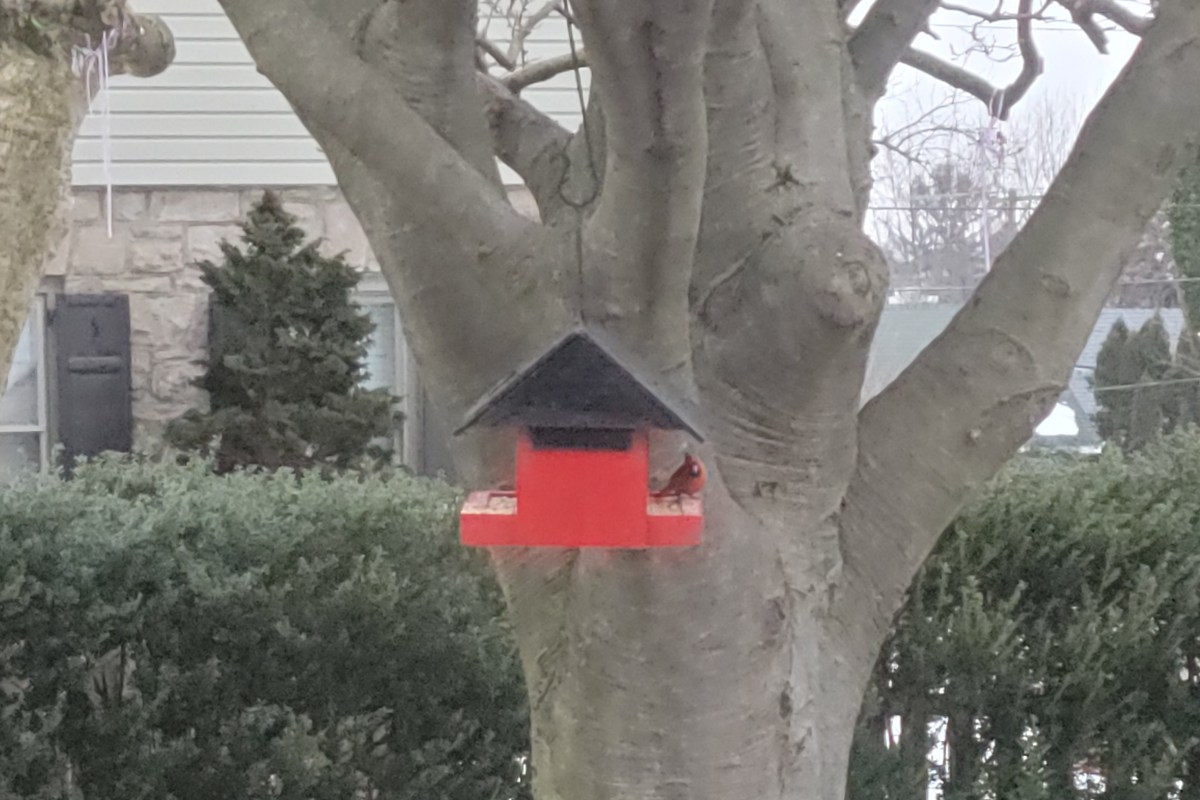
This morning when I walked out the back door to go to work, there was snow on the ground and birds all around the feeder. But the best part, a beautiful cardinal enjoying her morning breakfast. Thanks Dad, for teaching me how to fix it.

Before the fixing

After the fixing

Moving forward, but not moving on…

What is it about New Years that gives us a desire to look back over the past year, reflect and then make New Year resolutions? This is a question that I have pondered over the course of my life. I was never one for goals or resolutions. When someone asks where I’ll be in 5 years, I’m never sure. Maybe it was due to my parents looking for stability and longevity and therefore the desire to be in one place for 5 years was something to achieve. My parents grew up in the great depression. My father fought in World War II. Did they desire to lessen their trauma impact by setting and keeping goals? Maybe it was my fear of failure. If you don’t set a goal, then you don’t fail. I guess it’s really just my stubbornness to not allow society to dictate a day that I need to reflect backwards so I can move forward.

As I consider that statement, reflect backward so I can move forward, I wonder if those of us who grieve don’t always reflect backward because we fear moving forward. I follow many grieving bloggers and Instagramers and a theme I am reading from many people who grieve is the fear of moving forward because we may appear to “forget” the person who has died. So, we grievers often do a little dance with our past and present. I find myself in this conundrum often. I desire to live in the past when my parents and best friend were still in my life. I desire to hear their voice and receive their guidance. I sit with my memories every day. Some days, those memories suck me down into a vortex and I don’t want to leave. It’s like that dream we all have had where a loved one comes back for a visit and you see them so clearly, and then you become aware that it’s a dream and you start to think of ways to hold on for just one more second, and suddenly you are being pulled out of the dream and you are lying awake in your bed trying hard to go back to sleep so the dream will continue. We fight so hard to make it happen. It’s almost as if we can’t deal with another loss that present’s itself in the dream. The other side of it is, staying awake and feeling the memory of the dream. Hearing that voice, or seeing that smile for just a moment, and being thankful and grateful that you had the opportunity to experience it again. That’s the moving forward.  In the moving forward, do we feel like we are letting go? Is there a dishonor if we move forward?

There is a woman by the name of Nora McInery that gives a wonderful TED talk (I’ll add her talk to the resources page). She talks about moving forward with grief.  I’ll never get over my grief, but what I will be able to do and what I have been doing better at is moving forward. Moving forward for me is starting to look like acknowledgement. The memory is there always inside me, and I smile now when I see my niece or nephew smile like my mom. Or when we talk about family stories and I hear my brother’s sound like my dad. I’m moving forward, but the past is still there.

This past year was a year of growth for me on many levels. 2020 was the year that I decided to no longer allow my fear of what “other’s think” to rule my life. This blog is the perfect example. I needed to do this for my own grief process, but I was so scared of what people would think when they read my blogs. I’m a horrible speller, I change tense’s in my sentence structure and sometimes I ramble on. But this past year, I said to hell with it all. I need to get out of my own head so I can begin to move forward. I don’t know what 2021 will bring. I hope it will continue to bring growth. As long as I’m growing, I’m doing pretty good. This year, I hope to perfect my dance. To find rhythm within the gentle sways, past, present, moving forwarding, but not moving on.

It’s been a year…

Today it’s been a year since your service. I didn’t remember it was today until Facebook reminded me. What kind of best friend am I that I didn’t remember that? Was it because I blocked it out? Was it too hard for me? Was it that I just got caught up in life and forgot? Or is it truly that I just not have accepted the fact that you are gone? Social media makes it so easy for me to forget. It feels like almost daily, FB gives me a memory of you and I, or a memory that you commented on. It makes it seem that you are still just a text message away.

My mind won’t let me go there yet. Even when your death day came and we celebrated with cake and stories, it still hadn’t sunk in. I look at pictures and laugh and remember the stories associated with the pictures. I go to pick up my phone to send you a message and my stomach drops knowing you won’t answer. The last year has seemed so surreal. I can deny your lack of presence in my life by saying we just have been too busy to see each other. It’s easier than saying you are gone. My losses in the past two years have been so crushing, that I have chosen to deny your loss. My heart told my head it couldn’t take anymore, so my head told my heart you were still there.  My head said, look on Facebook, Insta, or even my text messages. My heart believed it, my heart still believes it.

I can’t give away your title, even though other’s have desired it, it’s not theirs to take, not yet. If I keep the title of best friend, then it means you are still there. The title is thrown around so easily among people. Everyone becomes your best friend. Best friend titles are tossed as easily as a salad, one day she’s my best friend, the next day, he’s my best friend. But for you and I, that title has remained yours for 47 years. It may stay for another 47 years. You promised me you would take care of me when we were in the nursing home. You promised me that you would be my memory when it faded away. You were my story keeper. I find that I want to ask you about a memory that is foggy in my brain, but I know you won’t answer, you would if you could.

I wear your starfish; it never comes off. It’s close to my heart so my heart doesn’t have to feel another loss. I remember all our trips to the beach, how we talked the entire drive there and back. How we laughed and cried at all the changes in our lives over the years. It reminds me of our marathon dinners when we would drive our servers crazy because we couldn’t stop talking long enough to order food. There would be times when weeks or months would go by and we hadn’t talked, but yet as soon as we did, it was as if we never missed a beat.

You taught me how to do my hair and make-up. You taught me all about fashion and MTV and boys. You were my protector from bullies, you taught me forgiveness and how to dance (hopeless cause). You were there during my senior week firsts and we laughed about that almost every time we talked.  I know that eventually, I am going to have to learn to live without you, but I’m not ready. As long as I have Facebook telling me my memories, I won’t need to do it.

About a three months ago, I was at the beach and I was walking by myself and my mind drifted to you. I spoke to the wind and suddenly it was as if you were there. For a moment, I felt you, my whole body tingled with your energy. I tried to hold onto it for as long as I could, but too quickly it was gone. It was a double edged sword, I was devastated that I couldn’t hold on longer, but I was blessed to have had the experience of knowing that for the briefest of moments, you were right there, just like old times.

What do I say to someone who is grieving?

I was reflecting over the last post which discussed meeting other members of the grief club and thought I might have been a little harsh concerning what NOT to say to people who are grieving. I wanted to do a follow up post because I know from experience that people do not know what to say to someone who is grieving. It is an uncomfortable place to be in, especially when you feel that the person grieving may need to start moving on and get over the loss.  I put together a few more resources and added them to the resource page. When you have a few moments, jump on over there and check it out.

During both of my parent’s services, wonderful friends and family members came and provided so much support to my family. During this time of loss, I heard a few common phrases such as “Your mother is in a much better place”; “she would not have wanted to live that way”; “Crystal, you would not have wanted your mother to suffer”. Now please don’t get me wrong when I say this but, no shit, of course she’s in a better place and yes, I wouldn’t have wanted her to suffer any longer, but and this is a BIG BUT, she’s physically missing from me. That is what I am grieving. So when people tell me that she’s in a better place and you (Crystal) wouldn’t want her to suffer any longer, what you are essentially doing is shaming me for feeling sad that I lost my mother. Now, as caring, and compassionate people, I know this is not anyone’s intention, but the words we say during vulnerable times impact the person you are saying them to. As people who want and desire to make others feel better, we say things thinking it will help, when in reality, a genuine hug, a hand squeeze, sending food, card, flowers, they all are ways to allow a grieving person to know you are there and feel their loss.  Words have lasting impact.

Personally, having experienced the loss of 4 people in the last 5 years has taught me a thing or two. Before my own loss, I was the person who said those phrases. I thought I was helping. I thought I was offering some level of support. I remember reading an article when I was going through my bereavement training and being offended by the article. The article was similar to this blog, what NOT to say when someone was grieving. I took offence because I said those things and my heart was in the right place. Now being on the other side, I totally understand why those phrases are not helpful. But I still struggle with what to say. I have a wonderful friend who just lost her grandmother. Her grandmother had been ill for some time and the family was watching her decline slowly. When my friend told me her grandmother had died, my first response wanted to be thank goodness she is no longer suffering. But I stopped myself, because even though I know that, and I am sure my friend knows that she is grieving the physical loss of her grandmother. So, what do we say? Even saying to her, I know how you feel isn’t the right answer because I have no idea how she is feeling, in fact my friend may not even be able to state her feeling into words. So, what do we say in these situations: According to grief.com here are phrases to say to someone who is grieving:

  1. I’m sorry for your loss
  2. I wish I had the right words
  3. Give a hug and say nothing
  4. Just be present and silent

My favorite and I use this a lot: “My favorite memory of your loved one is” or “Tell me your favorite memory of your nana”. I find both of these phrases work well for when you really knew the person who died, and it helps when you don’t know the person who died, but you are supporting your friend.

Grief.com also provides phrases to NOT say to someone who is grieving:

  1. At least she lived a long life, many people die young (CRINGE)
  2. He is in a better place
  3. There is a reason for everything (oh really, I don’t want to be taught this reason)
  4. Aren’t you over him yet, he’s been dead for a while (I can’t even on this one)
  5. You can still have another child……
  6. Be strong (WORST of the WORSE)

Remembering that using words can’t fix the outcome of death.  We can’t make it all better, what we can do is be present, we can offer unconditional support, even months or years later. We can listen to the stories, the memories and hold space for the individual to be vulnerable and real. Grief has no timeline, there are not stages or process’ people need to go through to get to the other side of grief. Grief is a wave in the ocean. Sometimes the wave is small and riding it is easy, some days the waves are huge and all you can do is hold on tight and pray that you will not sink down to the ocean floor.  

What have you experienced through your grief journey? Any phrases or words that provided you comfort?

The Grief Club

What is it about grief that makes you become a member of a club that you did not sign up for. Is there some sort of energy that surrounds you that other people can see and because of their own grief, they gravitate toward you? It’s like a mini grief support group happening at the most interesting of times.

This happened to me very recently on a mini vacation that my paramour and I were on.  We were enjoying a wonderful dinner and drinks outside under the lights. We were having good conversation and admiring our interesting surroundings. We did have an in-depth conversation about the loss of my best friend, but otherwise, the mood was calm, easy, and relaxed.  As we were talking, another couple proceeded toward us only to stand at a makeshift bar next to our table. Mike, being the friendly and engaging person that he is, said hello. Within a few moments, the couple found their way to the two empty seats at our table.  Now I would not be transparent here if I didn’t say the couple had a few drinks in them by the time they sat down to talk with us. They introduced themselves as Mike and Wendy (who were just friends).  Conversation started at a superficial level, but quickly advanced when the young lady went to the rest room, and her male companion told us that he is wife of 20 plus years just died 2 months ago. She died suddenly. He said it was the widower maker. And just like that, he and I had a connection. Another member of the grief club.

Once back from the restroom, his female friend caught herself up on our conversation. She immediately tried to placate him. She tried to use words that each of us who are in the grief club cringe at hearing. She said he would be ok, have another drink, do not dwell on your loss, focus on what you have in front of you.  I could tell she was shutting down his emotions. She wanted to put the band aid back over the wound so she would not have to see it anymore. Often grief club members experience a “Wendy” during their grief process. A Wendy does not know what to say so they will fill up a silent void with empty words. They offer sympathy, but they do not offer empathy. I never understood this difference until I joined the grief club. And let me tell you, there is a difference. I will never forget the year my parents died, that spring I went to the beach with my best friend. She was a second daughter to my parents, and she lost her dad when she was 7 years old. When I sat and talked about watching their swift decline, her eyes filled with tears, she reached and held my hand and gave space me to be sad. That was empathy. When someone sits down with you in your time of agony and does not try to fix your emotions away. Brene’ Brown is such a great resource to better understand the difference between sympathy and empathy.

I looked right into Mike’s eyes and said, “My god man how are you even walking upright?” Relief flooded through him. I told him my story and we recognized our club membership. Mike began to open up and speak freely about his emotions. How hard it has been over the past two months and he’s finding he has good days and bad days. I could offer some normalization to him that he is on the right track with his grief journey.

Grief can be a lonely place. I find even now; I sometimes like being in that lonely place. It feels like it is the only thing that is mine. The memories are mine to keep. Maybe it is the social worker in me, or the fact that I am a strong empath, but I feel emotions deeply.  Being an empath also means other’s gravitate toward you and desire to tell their story.  That night, after our experience with Mike and Wendy, we pondered the coincidence of the night. My Mike and I saw it as a cool thing. A situation where someone was clearly hurting and trying hard to find a real empathetic connection to validate his feelings. Mike would call it a God moment; I would call it mutual recognition of membership in the grief club. Have you experienced this type of connection?  Take a look under the resources to see the video by Brene’ Brown. She is an excellent resource!

Getting started and moving in the right direction…..

Please note during this blog, I will use the term “family” very consistently. Family in my terminology is defined as a group of people who are either biologically related or chosen by an individual to be inside the personal circle of that individual.

It has been interesting over the course of my professional career watching other families respond to crisis’s centered around an aging parent. Keep in mind, in the hospital setting, it was rare to see a family that had it all together and had a plan in place before the crisis took hold. What was normal, was to see families taken off guard by how bad things were at home and that their family member was unable to return home after a hospital stay. When families are in crisis mode, good decisions are hard to come by. Over the years, I have had friends who have asked for my assistance with helping their family prepare for crisis. The focus of this blog is to share what I feel are good steps toward managing an inevitable crisis down the road.  I will be very generic in my discussion and my suggestions may not apply to your case but reach out to me and I can help guide you. Not every family is created equal.  My knowledge comes from both professional and personal experience.

Scenario: Two older people living together. They have 4 children, 3 live close, 1 lives out of state.  Two of the children are noticing some signs that things are not going so well at the home of the older couple. These may be subtle signs such as lack of good meals, repeating stories, a home that was once clean, is no longer tidy and neat. Increased bickering between the couple, one person withholding information from a child, yet the significant other tells the child the information. A dent in the car, overpayment/underpayment of bills, just to name a few. At this point, often a child will notice these issues but may not say much or if they do, their siblings may not agree, and they silence the other sibling.

What needs to happen to avoid crisis mode?

  1. Call a family meeting with your family. I think it’s important to start out with siblings and their significant others, but you could also include anyone that you feel has an active role in the care of the couple. Sit down and discuss what you are seeing and observing. Ask others if they are seeing the same thing. You may get mixed feedback as each person may have a different relationship with the couple. Emotions may run a bit high at this meeting. Fear will motivate people to respond in a protective manner. You may need to have a few meetings so that the designated members can observe what you have observed and have time to process their own emotions around this information.
  2. After the family is on board, and everyone seems to be on the same page, you should discuss roles that each member feels they can take on. There should be a caption of the ship, meaning one person that drives the boat and keeps things organized.
  3. Medical evaluation. This is an area that I have observed that seems to be a big obstacle for many people. How does one convince the older person to visit the doctor to discuss the cognitive decline? And not only that, how does the individual convince the doctor that there is something going on at home. This is where a role of advocate is needed. If there is a family member that isn’t afraid to push back, this should be their role.  Primary Care Physicians (PCP) are wonderful! But if an individual is having cognitive issues at home, the PCP should refer them to a gerontologist. A gerontologist typically works in an environment with other providers such as nurses, social worker, psychologist and neurologist who specialize in the disease process of older individuals. This team can evaluate an individual from a holistic point of care and provide a solid diagnosis of what is going on with the individual. In order to see a gerontologist, a person will need a referral from the PCP. The gerontology team will pull in the family as part of the support system.
  4. Advance Care Planning.  I am a big supporter of early advance care planning. And when I say early, I mean young adult early. We live in a death-defying country, so as a result, we don’t like to talk about how we want to die. But talking about how we want to die is important on so many levels. When you can sit down and talk about how you want to die with your family, you give them a gift. A gift in the form of not having to guess if you would want a feeding tube, or CPR or other forms of life sustaining treatments. I would encourage you to start these conversations now. I will give you resources on how to get started.
  5. Have another family meeting and if able, include the older couple. You need to learn to be open and honest with your older family members and if they can control what happens as process’ move forward, that will be helpful for a buy in. This is also the time where you must NOT make promises you may not be able to keep. Often, an older person will ask you to promise not to place them in a nursing home. I have sat with more individuals than I want to count who grieve over not being able to keep that promise. This is the time that you formulate how to support at home and for how long. This is the time you begin to research home care options and long-term care options.
  6. Begin to understand the financial outlook of the older couple. Someone in the family will need to evaluate where the couple is financially and what they can afford moving forward. You may need to schedule an appointment with a lawyer so that Power of Attorney (POA) documents can be started.  This needs to happen before the individual is no longer able to cognitively understand what is happening. A POA is very different than a will. Again, an attorney will be able to discuss all those options with you and your family.  Just a very quick note here (my thoughts ONLY), you don’t need an elder care attorney unless there are major financial dividends and/or trust funds or business that need to be protected. A family attorney will do a fine job and you won’t have to pay a large sum up front that some elder attorneys might charge. Again, know your options, do your research.  
  7. Start looking at long term care options. Educate yourself on the differences between personal care homes, boarding homes, assisted livings, long term care, continuing care facilities.  Go and visit, ask what happens when/if money runs out. Don’t assume anything until you educate yourself.  If you have an older family member who has been diagnosed with dementia or Alzheimer’s disease, look for facilities that have secured units. Not only are those units locked, but they offer special programing centered around individuals with cognitive decline disorders. Many facilities require that all their staff are specially certified as well. This is beneficial to the individual with a cognitive decline disorder.

Not to overwhelm you, I am going to stop here, and I will discuss each of these points in upcoming blogs. I know each situation is different and my hope is that this blog will give you a starting point and some ideas as you begin this journey with the person you are caring for. Jump on over to my resource page for information about advance care planning and facility searches. I’ll add more as able.

Father’s Day

Everyone said it would get easier. They told me each passing year would be better. The first year, my dad had just died, it was fresh, raw unfiltered. The second year, I decided to buy a house. Distracted thinking was my coping mechanism. This year, COVID. This year, I finally had to sit in the pain and the hurt. Let me tell you, it doesn’t seem to be better.

My dad was 47 years old when I was born. He had already raised 3 boys. He was a minister in the church of the brethren. He worked for the local electric company. He would go hunting during hunting season and fishing during fishing season. He was a simple man, one who lived by simple principals. He was born during the “Greatest Generation”.  He told me he remembered the bombing of Pearl Harbor. He was walking up the steps to his high school when he heard that the United States was attacked by Japan. Two years later, in 1943, he enlisted with the Army and fought for his country in the South Pacific. When dad came home in 1945, he didn’t talk about the war again until 1989.  

Thanks to my dad, I became a history buff. We often took day trips to Gettysburg and he would tell me all about the battle at Little Round Top. He would tell me about the Peace Light and how the United States made a commitment to never fight amongst themselves. He took me to Williamsburg and we talked about the freedoms that the founding American’s wanted from England. We couldn’t seem to go anywhere where my dad didn’t share a story about history. I was in 11th grade in 1989 and we were studying World War II. I came home and started asking my dad questions. After a while he agreed to speak to my class about being a veteran of the war. It was the first time that I ever knew that my dad was a medic for the Army. He told so many stories. I hold those stories close to my heart. I always told myself that I needed to sit down with him and video his stories, because eventually they would be lost. It is one of my biggest regrets to this day.

My father was an extremely religious and God-fearing man. He had high standards and kept to them. We were never allowed to enter a restaurant that had a bar. My dad was always worried that someone would see and think we were going drinking. He instilled a wealth of religious teaching into my life. He could quote a bible verse from memory. It would amaze me how at the most inopportune time (such as coming home from a night of dancing with my friends) that my dad could pull out a bible verse about the sins of dancing.  I felt like the movie Footloose was made from my life.

Dad could fix almost anything. I would often be tasked with the job of holding the light while he would use one of his tools to perform his magic. My dad taught me how to change my tire, my oil, my spark plugs and add all kinds of fluids to my car. He would often be called to one of our homes because something was broke, and we knew he could fix it. During his retirement years, dad took up woodworking. He made beautiful items. Benches, clocks, bird houses, doll cribs and doll houses. It’s amazing how those simple homemade items are so treasured today.

I was talking to my brother this past week on the phone and he said to me “Crystal, I really miss my dad, if I could bring one person back it would be my dad”. Through that conversation, I felt the immense loss of the man we called dad. He was a quiet, strong, knowledgeable, loving caring man. He was consistent and stubborn.  We miss him. As I reflect on today being Father’s Day, I acknowledge that our family was blessed. I also acknowledge that not everyone had the type of dad we had. I also recognize that many of you reading this have lost a dad, a father figure, an important man in your life. I wish I could tell you it gets easier, but after 3 years, I’m not sure it will ever be easy.  I want you know that you are not alone in your grief, that many other’s are scrolling through Facebook and smiling at friends and family who still have fathers, all the while you are feeling this odd sense of jealousy, sadness because you can’t physically hug your dad.  Big brother, I miss my dad too and what I wouldn’t give to hug his big broad back one more time. Happy Father’s Day to all of you going through this loss, whether it’s old or new or somewhere in between. You are not alone.